
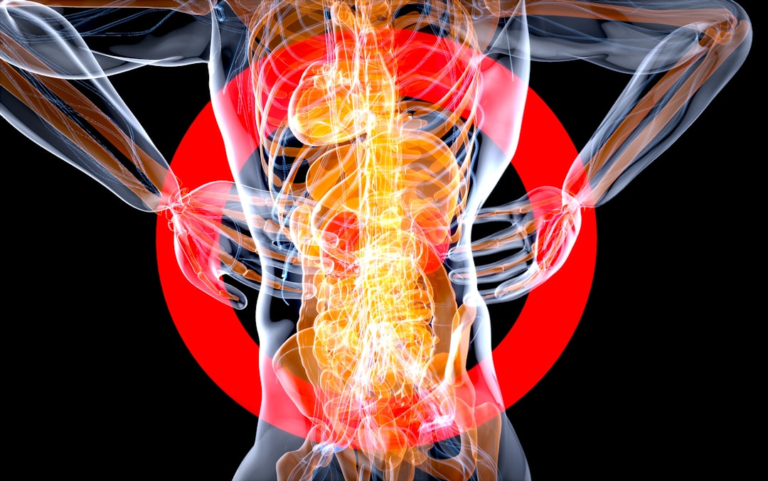

When Coughing Causes Rib Pain: What to Do (and What Actually Helps)

During cold and flu season, it’s common to see a surge in:

  • Rib pain
  • Chest discomfort
  • Upper or mid-back pain

Often, the cause isn’t obvious—until you connect it to weeks of persistent coughing.

Your ribcage does constant, repetitive work. When that workload increases (like with frequent coughing), it can lead to:

  • Joint sprains (sharp, localized pain near the spine or chest)
  • Muscle strain (diffuse pain across the ribs from intercostal muscles)

These structures aren’t built for repetitive strain at that intensity.

What Coughing Does to Your Ribcage

Coughing is necessary—but it comes at a cost.

Your body is trying to:

  • Expel irritants (virus, bacteria, mucus)
  • Protect your lungs

But excessive coughing can:

  • Reinforce the cough reflex (like scratching an itch)
  • Overload rib joints and muscles
  • Delay recovery if unmanaged

How to Manage the Cough Without Making the Injury Worse

The goal isn’t to stop coughing entirely—it’s to make it more efficient and less frequent.

Talk to Your Provider About:

  • A cough suppressant (to reduce frequency)
  • An expectorant (to make each cough productive)

This combination helps:

  • Reduce strain on your ribs
  • Support your body’s natural clearing process

When to Take Rib Pain Seriously

Some discomfort is expected—but not all pain should be ignored.

Seek medical care if:

  • Breathing deeply causes sharp or internal chest pain
  • Pain feels deep inside the chest
  • Your cough is severe or worsening

When in doubt, get it checked.

Why Rib Injuries Need Gentle Care

Rib connections are made mostly of:

  • Cartilage
  • Muscle

Not rigid joints.

That means:

  • They don’t respond well to aggressive treatment
  • They need gentle, supportive care

Sometimes, bodywork or spinal treatment can help by:

  • Reducing compensation patterns
  • Releasing nearby tension
  • Redistributing strain
cartoon drawing of yaling with tools for you

Things I’ve learned from patients over the years that might help you

1. Support More Productive Coughing

Garlic can help your body clear mucus more effectively.

  • Acts as a natural expectorant
  • May support antimicrobial activity
  • Can be added to food or taken as capsules

If using capsules:

  • Take with food
  • Choose forms that are easier to digest

2. Support Tissue Healing (Not Just Pain Relief)

Arnica Montana can be useful for:

  • Sprains
  • Strains
  • Bruising

But it’s often misunderstood.

Important distinction:

  • It’s not a painkiller
  • It supports healing of connective tissue

That means:

  • Faster recovery
  • Earlier return to pain-free movement

Best used:

  • Topically
  • Sublingually

3. Gentle Movement Can Help (Even When It Hurts)

When everything hurts—even lying still—movement might still be part of the solution.

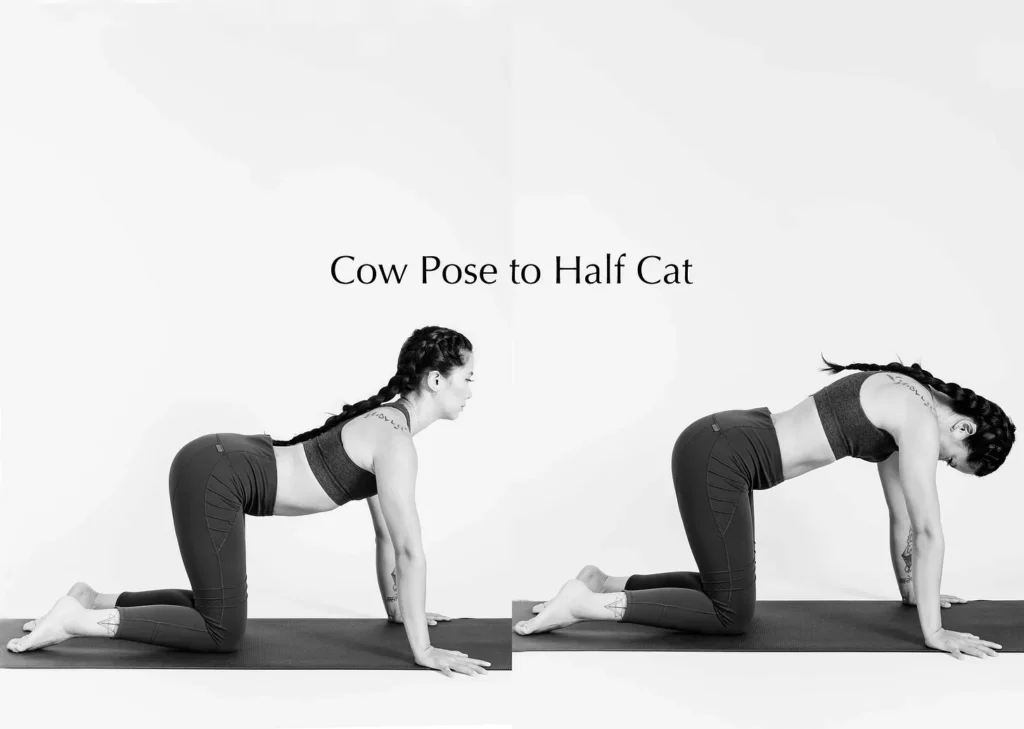
Try: Half Cat Position (from Cat-Cow)

  • A modified, gentle activation of the ribcage
  • Helps reduce stiffness and guarding
  • Can improve how the ribs move during breathing
Key guidelines:

  • Stop if symptoms worsen afterward
  • Mild discomfort during is sometimes okay
  • Many people feel better after doing it

A Counterintuitive Insight

With rib injuries, complete rest isn’t always helpful.

Sometimes:

  • Gentle activation reduces pain
  • Movement restores function
  • Stillness increases sensitivity

The key is dosage and gentleness.

The Bottom Line

Coughing rib injuries sit in an uncomfortable gray zone:

  • Not severe enough to seem urgent
  • But painful enough to disrupt daily life

The biggest mistake?

Ignoring them or pushing through without strategy.

Instead:

  • Make coughing more efficient
  • Support tissue healing
  • Use gentle movement wisely

Have a Strategy That Helped You?

If you’ve dealt with coughing-related rib pain and found something useful, share it. These real-world insights often help others navigate the same experience.

References:

(i) Qiu Zhuo-Er , Xu Jian-Bang , Chen Lei , Huang Ze-Xin , Lei Tian-Lun , Huang Zi-Yang , Hou Xiao-Chun , Yang Hai-Long , Lin Qin-Hua , Zhu Yun-Xin , Zhao Lei , Zhou Wen-Liang , Zhang Yi-Lin Allicin Facilitates Airway Surface Liquid Hydration by Activation of CFTR. Frontiers in Pharmacology. Volume 13 – 2022. 

(ii) Rouf R, Uddin SJ, Sarker DK, Islam MT, Ali ES, Shilpi JA, Nahar L, Tiralongo E, Sarker SD. Antiviral potential of garlic (Allium sativum) and its organosulfur compounds: A systematic update of pre-clinical and clinical data. Trends Food Sci Technol. 2020 Oct;104:219-234. doi: 10.1016/j.tifs.2020.08.006. Epub 2020 Aug 19. PMID: 32836826; PMCID: PMC7434784.

(iii) Bhatwalkar SB, Mondal R, Krishna SBN, Adam JK, Govender P, Anupam R. Antibacterial Properties of Organosulfur Compounds of Garlic (Allium sativum). Front Microbiol. 2021 Jul 27;12:613077. doi: 10.3389/fmicb.2021.613077. PMID: 34394014; PMCID: PMC8362743.

(iv) Toma C-C, Marrelli M, Puticiu M, Conforti F, Statti G. Effects of Arnica Phytotherapeutic and Homeopathic Formulations on Traumatic Injuries and Inflammatory Conditions: A Systematic Review. Plants. 2024; 13(21):3112. https://doi.org/10.3390/plants13213112

ya ling liou

Ya-Ling Liou, D.C

I’m an evidence-based chiropractic physician with more than three decades of clinical experience. I’ve also spent years teaching anatomy, physiology, kinesiology, and physical medicine. I value taking the time to foster authentic human connection, creating space for a deeper understanding of my patients’ pain and lived experience.

Your Personal Pain-Coping Coach

Get a custom roadmap to help you understand and move through persistent pain.

Relelated

When Is Foot Pain Actually Plantar Fasciitis?

Heel or foot pain isn’t always straightforward—but plantar fasciitis has some recognizable patterns. Understanding what’s really happening in your foot can help you respond early and avoid longer-term issues.

woman squatting

There Is Nothing Wrong With Your Posture

In this episode, we explore why posture is often misunderstood, why what you see on the outside isn’t a reliable indicator of what’s happening inside your body, and how focusing too much on appearance can actually make things worse.