
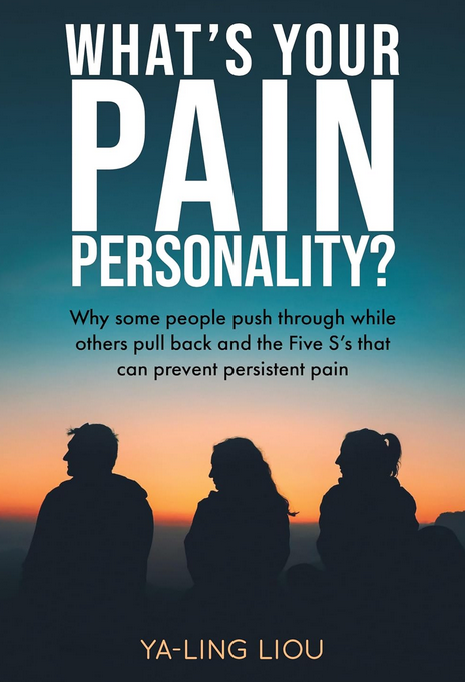
What's Your Pain Personality?
Why some people push through while others pull back and the Five S's that can prevent persistent pain
What if your pain isn’t the problem—your response to it is?
You wake up with pain that shouldn’t be there. You didn’t injure yourself. And yet it hurts. You try to push through it… or avoid it… or figure out what you did wrong. But instead of improving, the pain lingers—or comes back.
Here’s the missing piece:
How you respond to pain may be shaping how long it lasts. After more than 30 years in clinical practice, Dr. Ya-Ling Liou discovered something most people never consider: Two people can experience the same injury, receive the same treatment—and have completely different outcomes.
The difference isn’t just physical. It’s behavioral.
Introducing: Your Pain Personality
In What’s Your Pain Personality?, you’ll discover three common patterns that influence how pain unfolds:
- The Achiever — pushes through pain and ignores early warning signs
- The Protector — becomes cautious and organizes life around pain
- The Critic — turns pain into self-judgment, pressure, and frustration
Each pattern makes sense. Each begins as protection. But each can quietly prolong pain, delay recovery, and increase suffering.
Why This Matters
Most pain advice focuses on treatment:
- stretch more
- rest more
- strengthen more
But without addressing how you respond to pain, even the best treatment can fall short.
This book reveals the missing piece: pain coping.
What You’ll Learn
- Identify your Pain Personality (and what it’s costing you)
- Understand why pain doesn’t always match the injury
- Recognize early warning signs before pain becomes chronic
- Break patterns that contribute to recurring pain
- Use the Five S’s of Better Pain Coping to respond with clarity and confidence
- Support faster, more effective recovery—without guesswork
A Better Way to Approach Pain
This is not a book about pushing through pain. And it’s not a book about avoiding it. It’s about learning how to respond to pain in a way that actually helps your body recover.
Because pain is not just something you feel. It’s something you interact with—every moment it’s present.
And once you understand that…you can begin to change it.